The best wireless mice for church offices and home workstations balance comfortable everyday control with practical connections and battery needs. This guide compares compact travel options, adjustable ergonomic designs, multi-device productivity mice, and gaming-focused models so you can choose the fit for your setup.
Quick Top Products
Contour Unimouse
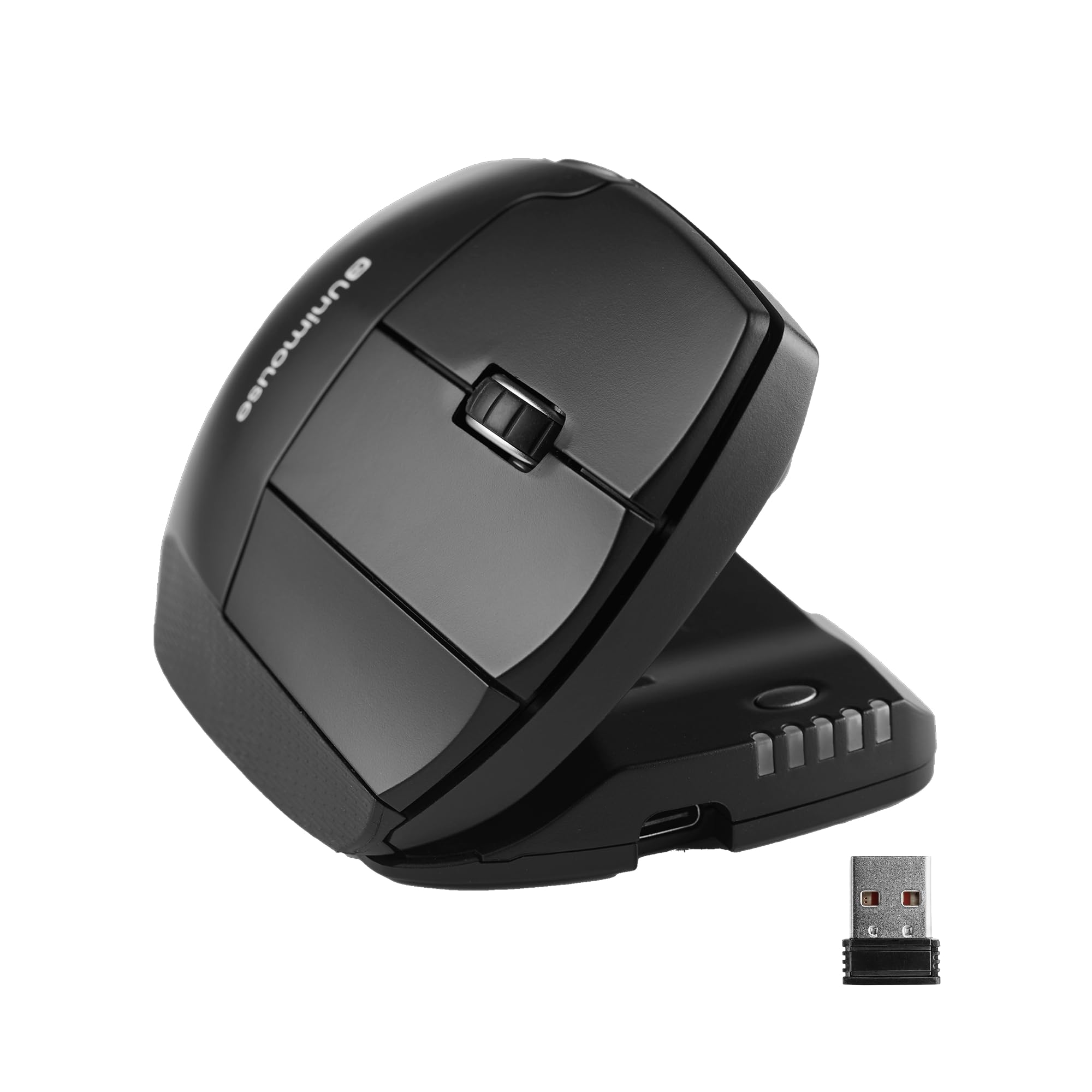
- Adjustable vertical tilt and thumb support customize the grip.
- Six programmable buttons and a scroll wheel support customized workflows.
- Rechargeable battery lasts up to 12 weeks per charge.
Best For: Right-handed users who want to fine-tune mouse angle and thumb support.

ESR MagMouse
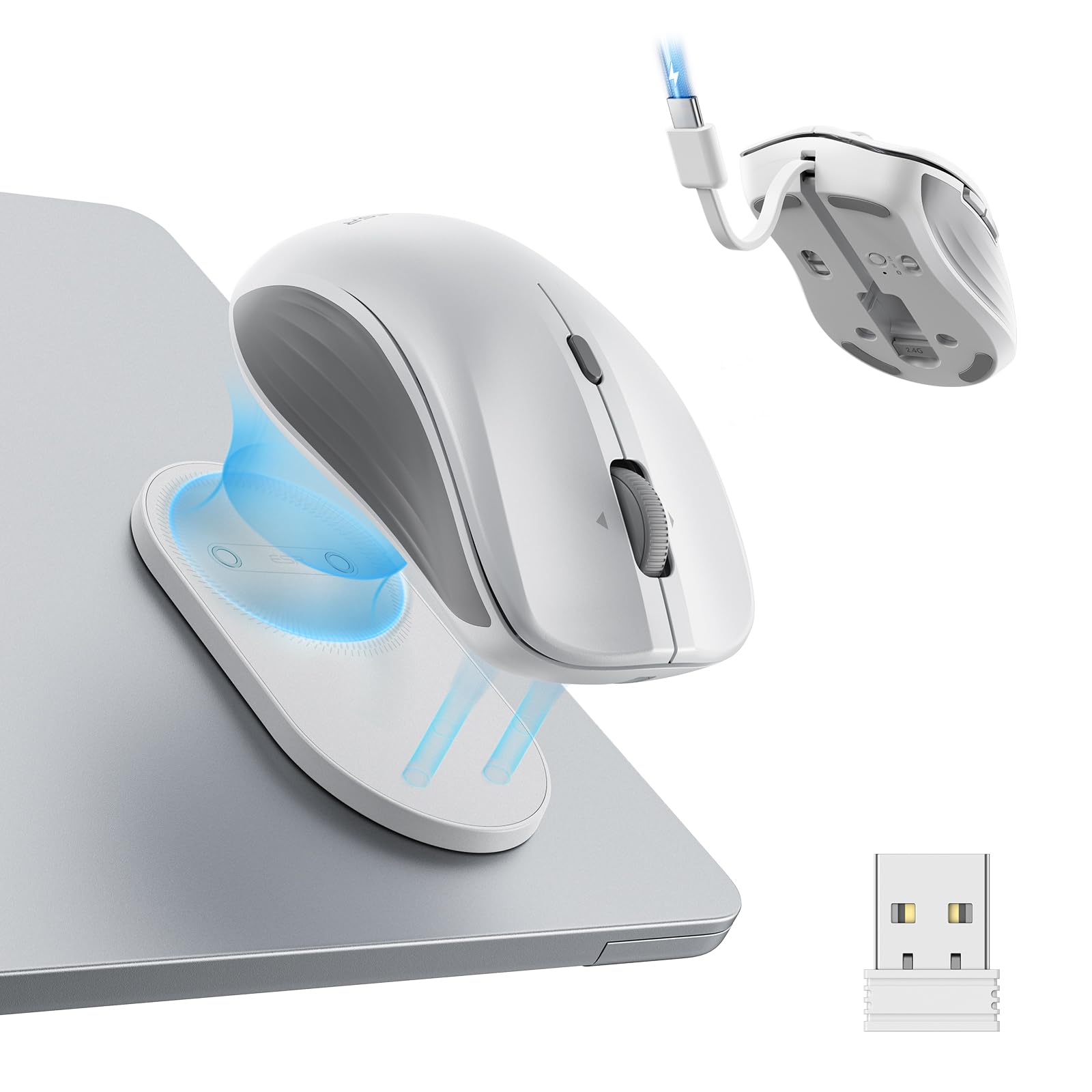
- Magnetic base attaches to a reusable, residue-free adhesive holder.
- Built-in USB-C cable supports quick top-ups and up to 160 hours per full charge.
- Bluetooth 5.0 and 2.4 GHz dongle offer two connection modes.
Best For: Laptop users who want a portable mouse with a built-in charging cable and holder.
JLab JBuds Wireless Mouse
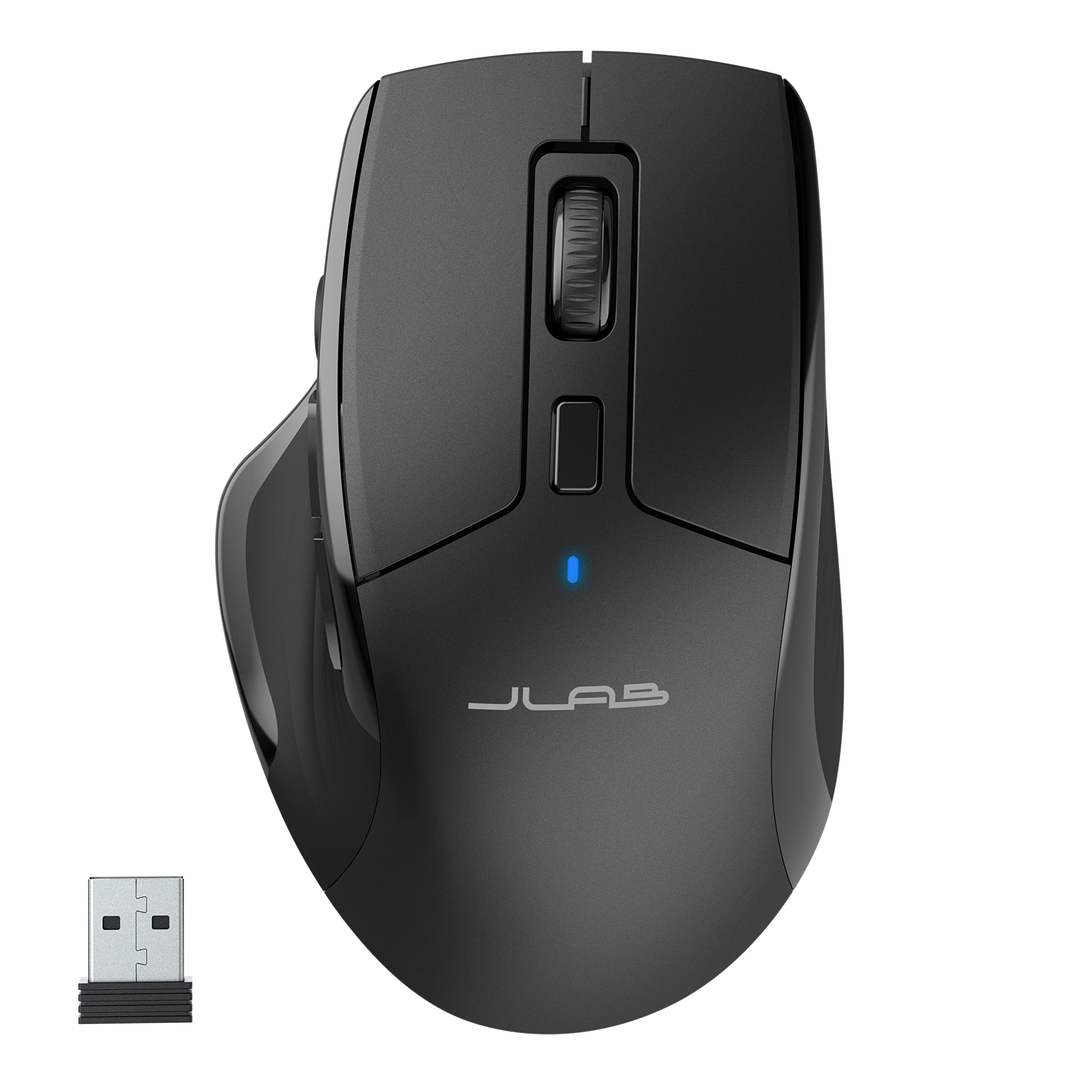
- Full-size ergonomic shape and silent-click buttons target all-day work.
- Connects to up to three devices using Bluetooth 5.2 or a USB dongle.
- Seven programmable buttons can be remapped in the JLab Work app.
Best For: Office users who want a full-size mouse and quiet clicks across several devices.
JLab Epic Wireless Mouse
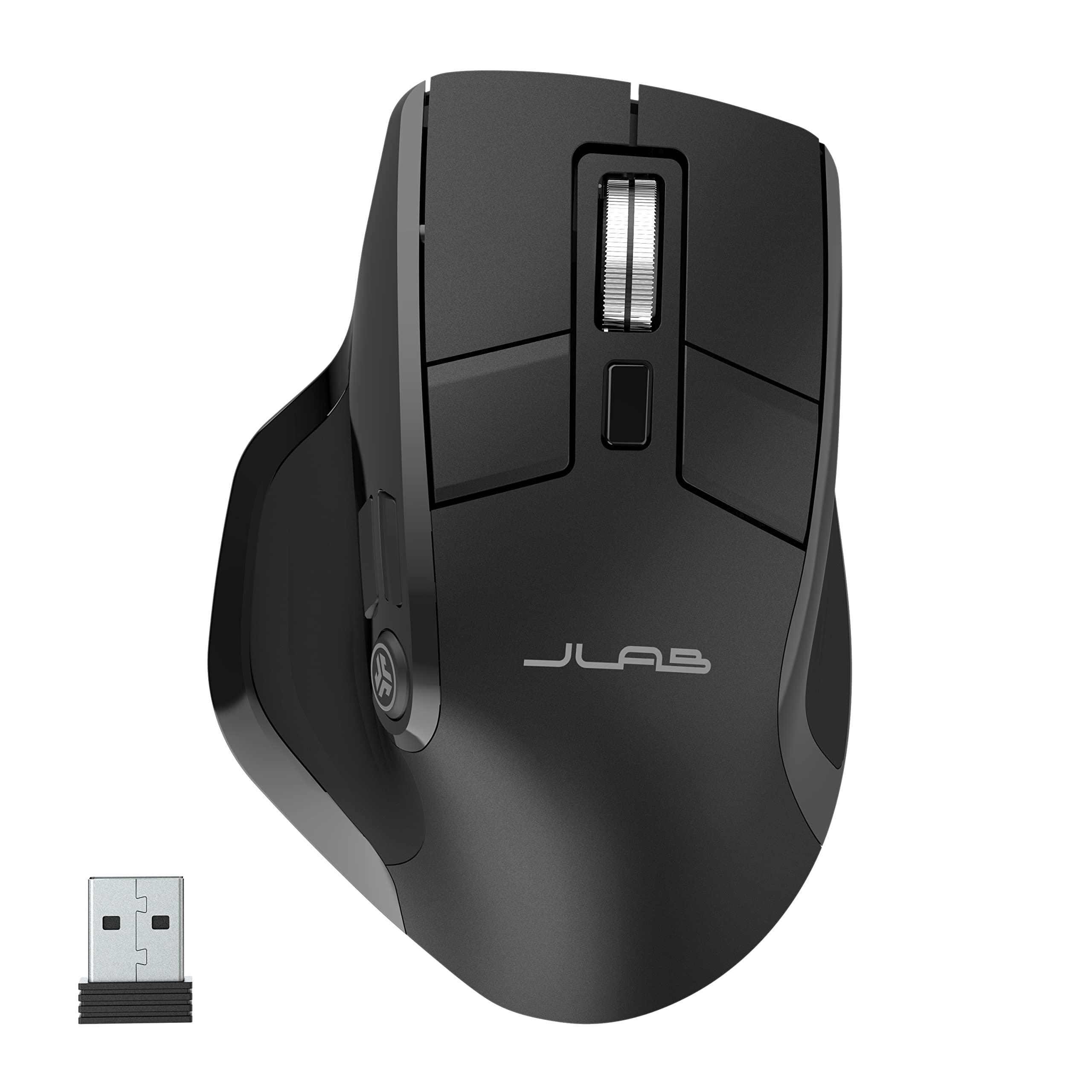
- OLED display shows battery level and current DPI.
- Connects to up to three devices through Bluetooth 5.2 or a USB dongle.
- Silent-click buttons suit quiet workspaces.
Best For: Users who want a full-size mouse with an at-a-glance battery and DPI display.
JLab GO Charge Wireless Mouse
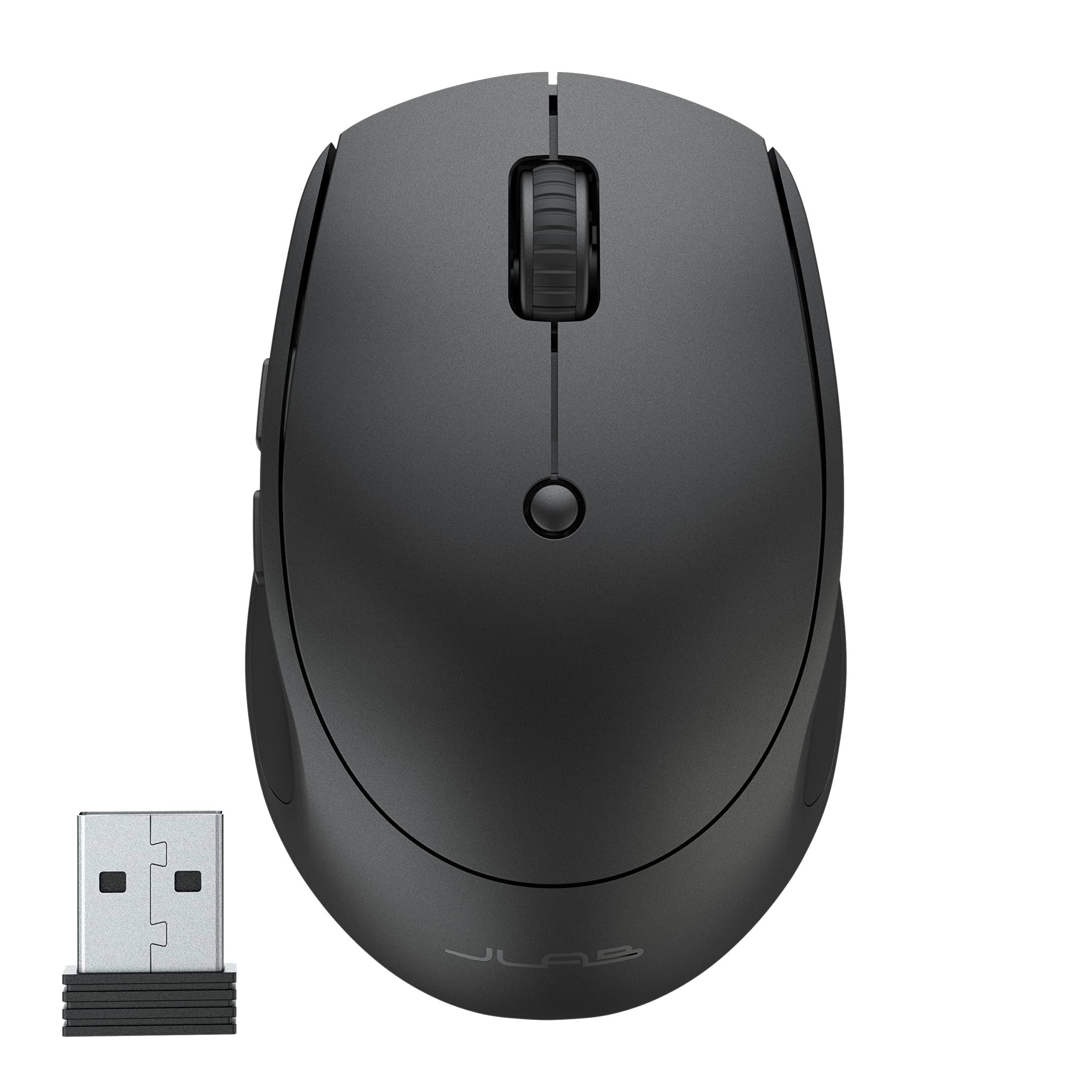
- Rechargeable battery lasts over four months per charge.
- Connects to three devices through Bluetooth 5 or a USB dongle.
- Compact design and silent clicks target work on the go.
Best For: Traveling workers who want a compact, quiet mouse with multi-device switching.
SteelSeries Prime Wireless
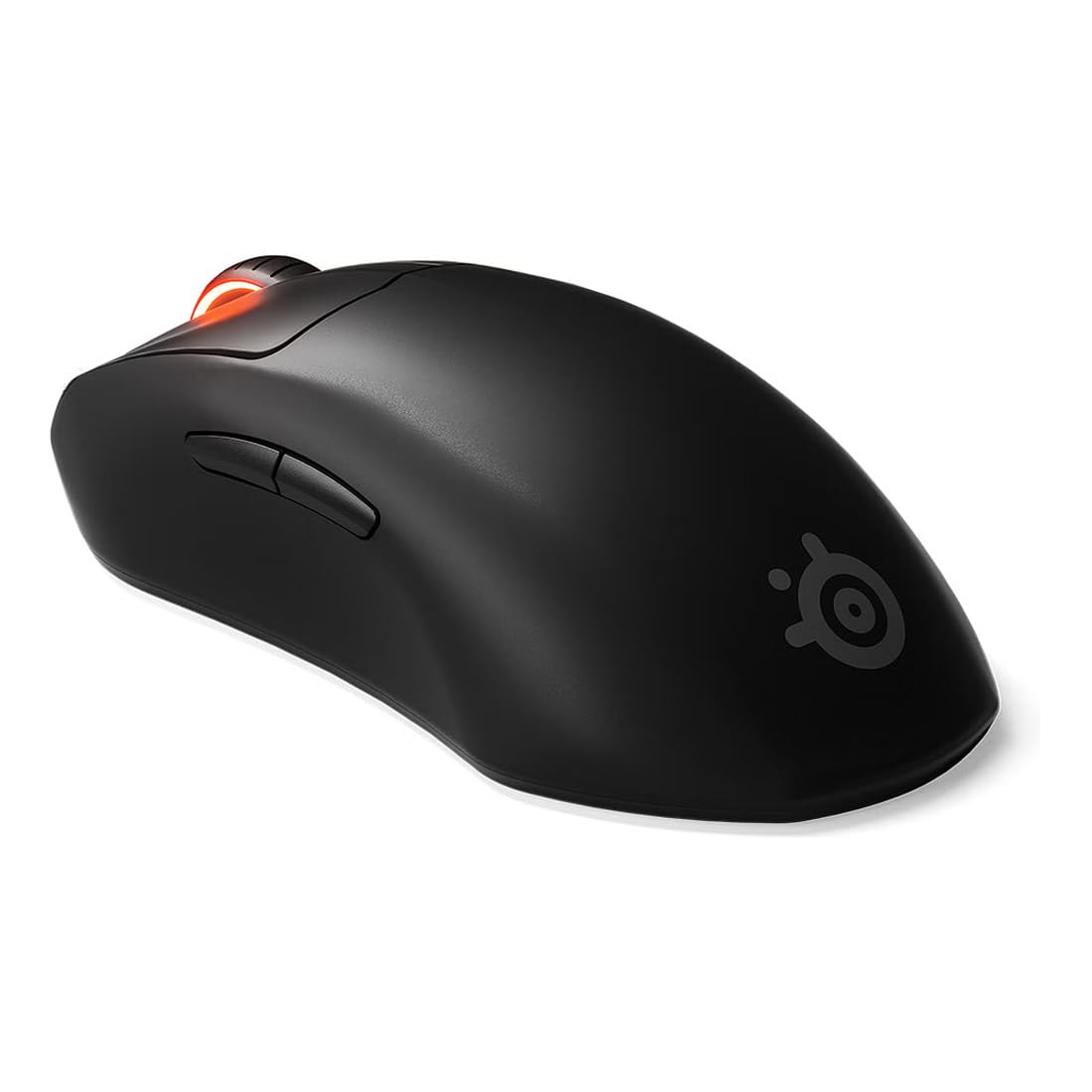
- TrueMove Air sensor is rated at 18K CPI.
- Quantum 2.0 wireless supports up to 100 hours of battery life.
- Right-handed shape accommodates finger, palm, and claw grips.
Best For: Right-handed FPS players who prioritize wireless precision and a familiar gaming shape.
SteelSeries Prime Mini Wireless
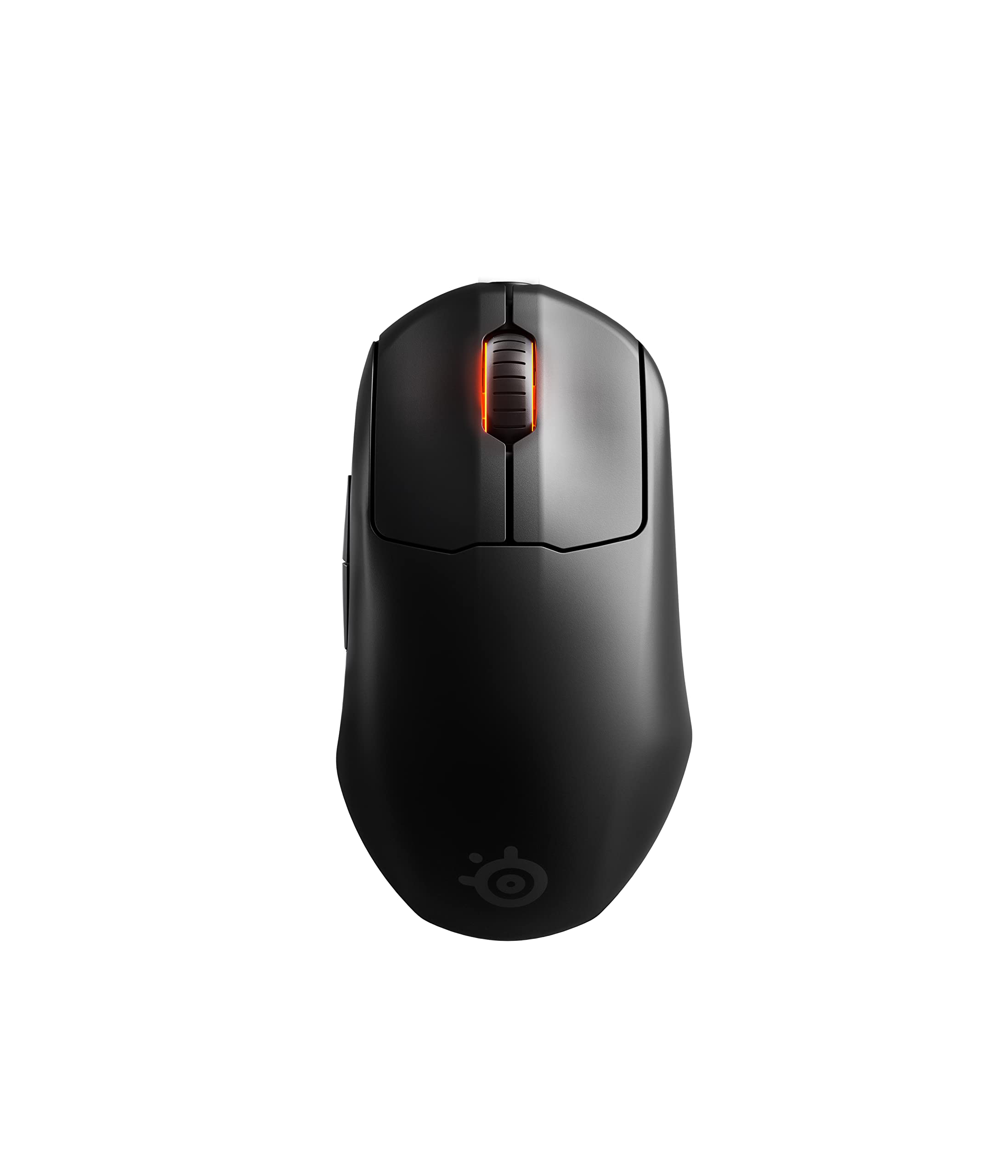
- Mini form factor weighs 74 g.
- TrueMove Air sensor is rated at 18K CPI, 400 IPS, and 40G.
- Battery life is up to 100 hours with fast charging.
Best For: FPS players seeking a smaller gaming mouse with wireless connectivity.
SteelSeries Rival 3 Wireless Gen 2
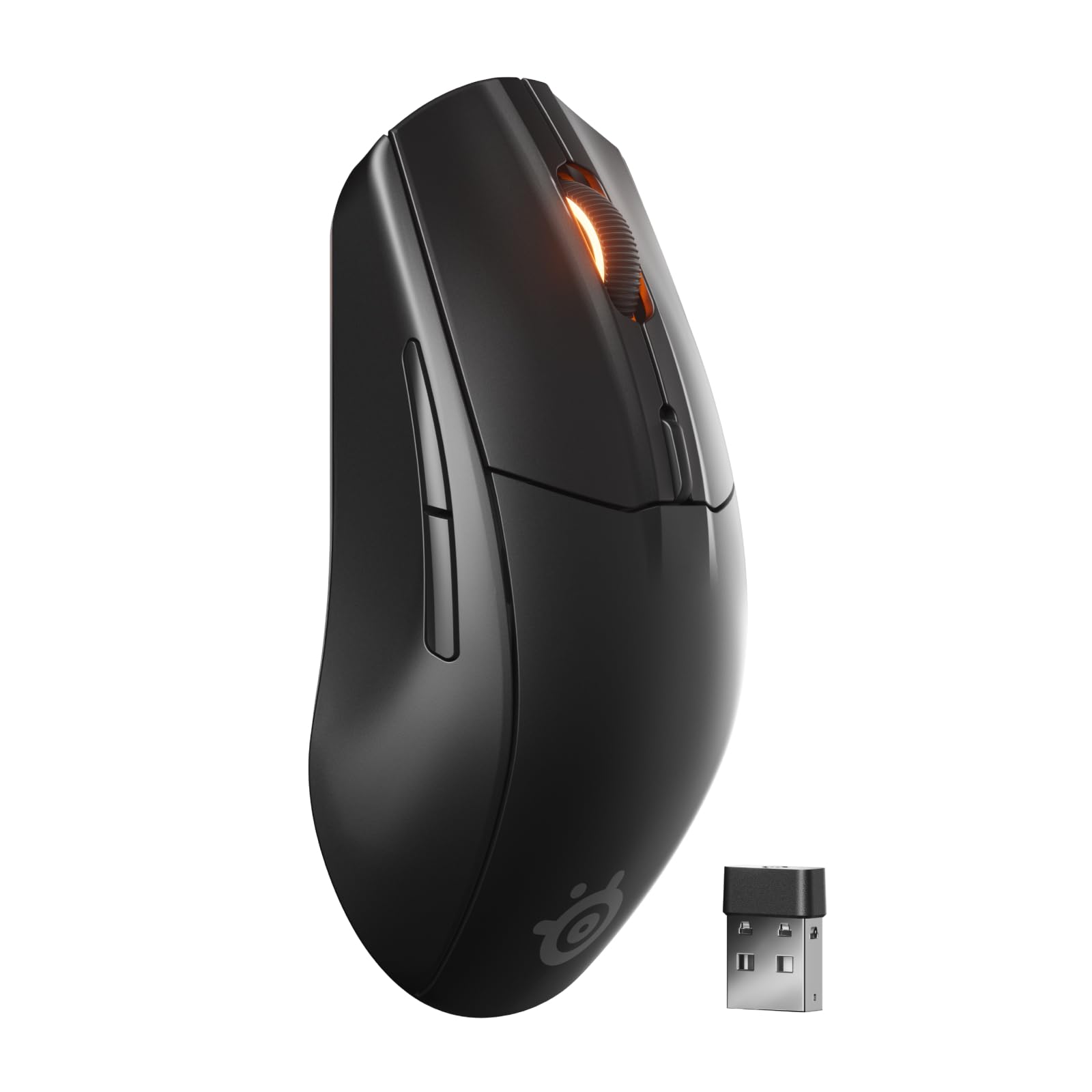
- Switches between gaming-grade 2.4 GHz and Bluetooth.
- TrueMove Air sensor provides 18K optical tracking.
- Battery life is up to 200 hours on 2.4 GHz and 450 on Bluetooth.
Best For: Players who want a wireless gaming mouse that can also connect to other devices over Bluetooth.
SABRENT Mini Travel Wireless Mouse
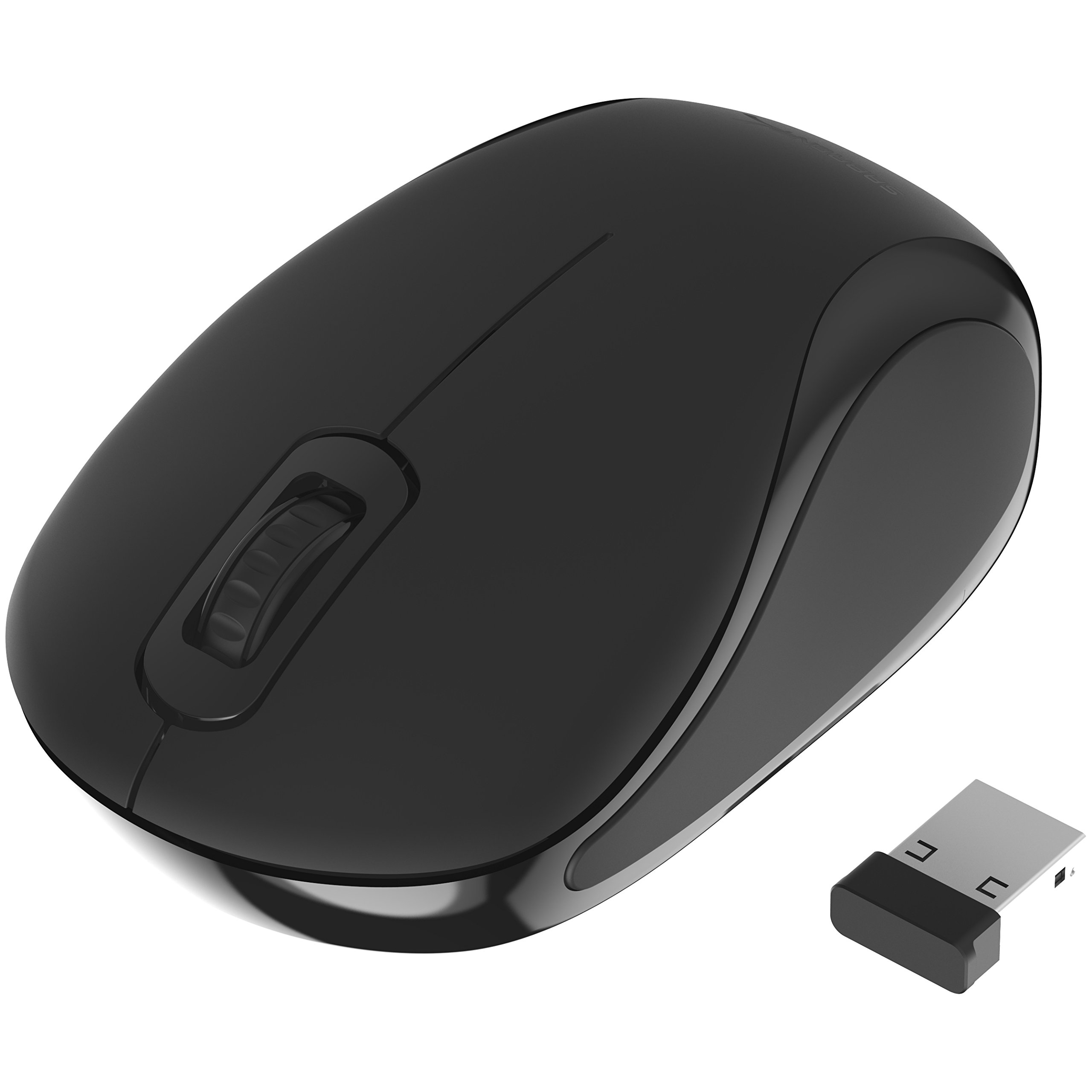
- Compact travel design uses a nano receiver.
- Optical tracking is rated at 1200 DPI.
- Ambidextrous, three-button design.
Best For: Laptop users who want an inexpensive, small mouse with a USB nano receiver.
SABRENT Rechargeable Wireless Mouse
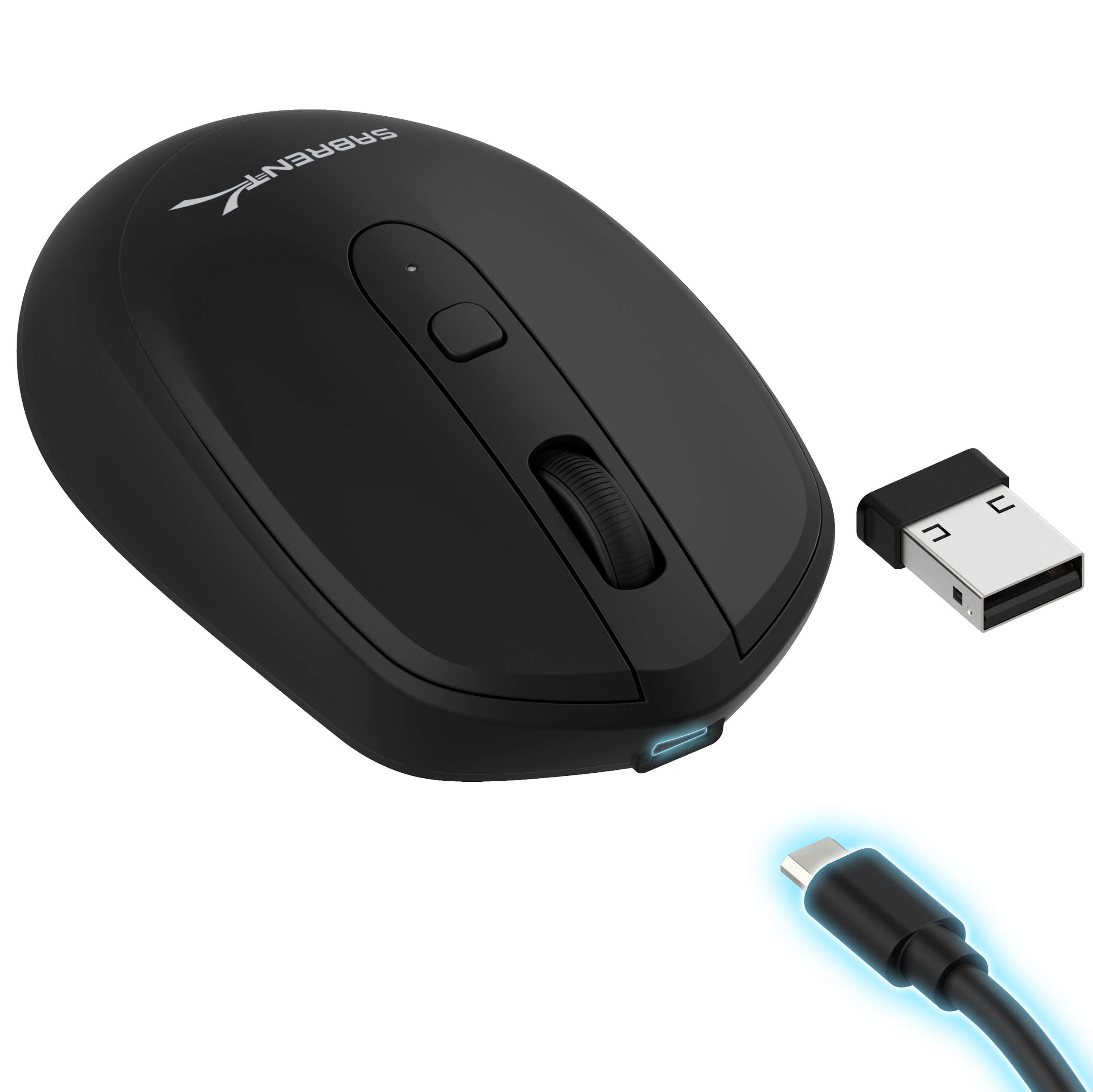
- Adjustable tracking settings are 800, 1200, and 1600 DPI.
- Rechargeable 600 mAh lithium battery.
- Uses 2.4 GHz wireless transmission.
Best For: Shoppers seeking a simple rechargeable mouse with adjustable tracking.
Adjustable Vertical Grip
Contour Unimouse Ergonomic Vertical Mouse Adjustable 35°-70° Tilt Angle, 6 Programmable Buttons for Productivity, Customizable Thumb Rest for Wrist Pain Relief | Plug & Play Mac/PC - Wireless - Right
The Contour Unimouse stands out among wireless mice for its adjustable vertical grip rather than a fixed shell. Its tilt can be set from 35° to 70°, and the thumb support moves in several directions, giving right-handed users room to adjust the fit.
Six programmable buttons and a scroll wheel support shortcuts for document work and creative tasks. It connects through a USB receiver and its rechargeable battery lasts up to 12 weeks per charge.
The tradeoff is its right-hand-only design, so left-handed users should look elsewhere. Consider whether you want a configurable vertical shape before choosing it over a conventional mouse.
Best For: Right-handed users who want to fine-tune mouse angle and thumb support.
| Pros | Cons |
|---|---|
|
|
Choose the Unimouse if a vertical shape with adjustable positioning matters more than a familiar low-profile design. Its movable thumb support and programmable buttons provide more fit and control options than the compact travel and standard office mice here.
Before buying, check that a right-handed design suits your desk setup and that you prefer a USB receiver; Bluetooth is not specified. Battery life is given as up to 12 weeks, but charging time is not specified.
Cable-Ready Travel Mouse
ESR MagMouse Snap-to-Carry Bluetooth Mouse, Wireless Mouse for Laptop | Rechargeable Mouse with Built-in Charging Cable, Reusable Adhesive Holder, BT 5.0 + 2.4 GHz Connectivity, Ergonomic, White
The ESR MagMouse is designed around portable work. Its magnetic base snaps onto a reusable adhesive holder, and a built-in USB-C cable removes the need to carry a separate charging lead.
The mouse connects through Bluetooth 5.0 or a 2.4 GHz dongle, while six DPI settings cover different cursor-speed preferences. Four-way scrolling adds side-to-side navigation for wide documents and spreadsheets.
The mouse is a practical wireless option for a laptop bag, but the holder's adhesive is part of the setup. Check that you are comfortable attaching the reusable base where you plan to carry it.
Best For: Laptop users who want a portable mouse with a built-in charging cable and holder.
| Pros | Cons |
|---|---|
|
|
The MagMouse suits people who regularly move between a laptop bag and a desk and value having the charging cable built in. Its holder and four-way scroll wheel offer a distinct travel-oriented setup, while the Unimouse focuses on adjustable grip and the JLab models on switching among work devices.
Before buying, consider where the adhesive holder will attach and verify compatibility with your computer. The product notes give Bluetooth and dongle modes but do not specify supported operating systems.
Quiet Multi-Device Office Pick
JLab, JBuds, Wireless Mouse, Bluetooth, USB Dongle, Multi-Device, Silent Click, Full-Size, Black
The JLab JBuds Wireless Mouse is a full-size productivity option with silent-click buttons and connections for up to three devices. Bluetooth 5.2 and a USB wireless dongle provide two ways to connect, and the device toggle helps when moving between a computer, tablet, or phone.
Seven programmable buttons and saved profiles add customization through the JLab Work app. It is rechargeable and supports several common operating systems.
Unlike the adjustable vertical Contour, it keeps a conventional full-size ergonomic shape; choose it when quiet operation and device switching matter more than a changeable grip angle.
Best For: Office users who want a full-size mouse and quiet clicks across several devices.
| Pros | Cons |
|---|---|
|
|
Choose the JBuds if you need a standard full-size shape, quiet clicks, and the ability to move between several devices without re-pairing each time. Its seven programmable buttons provide more customization than the compact JLab GO Charge, while the Contour offers a much more adjustable grip.
Check whether you want to install the JLab Work app for button remapping and profiles. Battery life and charging time are not specified, so factor that uncertainty into a workday setup.
Battery and DPI Display
JLab, Epic, Wireless Mouse, Bluetooth, Multi-Device, OLED Display, Full-Size
This JLab Epic is a full-size rechargeable mouse for users who want visible status information at their desk. Its OLED screen displays battery level and current DPI, while adjustable tracking lets you tailor cursor speed to tasks from spreadsheets to detailed design work.
Bluetooth 5.2 and a USB wireless dongle support connections to as many as three devices. It also has silent-click buttons and supports three saved profiles in the JLab Work app.
Compared with the JBuds, its distinguishing feature is the display; choose it if seeing battery and DPI status matters more than prioritizing a simpler work mouse.
Best For: Users who want a full-size mouse with an at-a-glance battery and DPI display.
| Pros | Cons |
|---|---|
|
|
The Epic is a good fit when you want status information on the mouse itself and routinely switch among devices. The OLED panel distinguishes it from the JBuds, which also supports multiple devices and programmable controls but has no display specified.
Both are full-size JLab options with silent clicks. Before choosing, decide whether you will make use of the display and app profiles, and check the charging details: the available product facts give battery capacity but not runtime or charging time.
Compact, Long-Interval Charging
JLab, GO Charge, Wireless Mouse, Bluetooth, USB Dongle, Multi-Device, Compact, Rechargeable, Black
The JLab GO Charge is a compact wireless mouse aimed at portable work. It connects to three devices through Bluetooth 5 or a USB wireless dongle and can switch among them, making it useful when one mouse serves a laptop and other devices.
Adjustable DPI and silent-click buttons cover common office tasks, while the rechargeable battery is described as lasting more than four months per charge. Its small, lightweight design is intended to slip into a bag.
Choose it over a full-size office mouse when portability is the priority, and check whether a compact shape suits your hand for extended sessions.
Best For: Traveling workers who want a compact, quiet mouse with multi-device switching.
| Pros | Cons |
|---|---|
|
|
Consider the GO Charge if you want a small mouse that can stay in a bag and pair with several devices. Its stated battery interval and silent clicks are useful contrasts with the full-size JBuds and Epic, whose product notes do not give battery runtime.
The compact form is the central tradeoff: check that it feels appropriate for your hand and work habits. Confirm whether Bluetooth or the dongle is the better connection for your devices.
Right-Hand FPS Control
SteelSeries Esports Wireless FPS Gaming Mouse - Ultra Lightweight, Prime Programmable, 18K CPI Sensor, Magnetic Optical Switches, PC/Mac, Black
The SteelSeries Prime Wireless is a gaming-focused mouse shaped for right-handed use and several grip styles, including finger, palm, and claw. Its TrueMove Air sensor is rated at 18K CPI, and the wireless connection uses Quantum 2.0 technology.
The rechargeable battery is described as lasting up to 100 hours, with fast charging available. Magnetic optical switches and six buttons round out the control setup.
It is a more focused fit than general-purpose office mice: consider it if FPS play and a right-handed shape are central, rather than prioritizing multi-device work features or an adjustable ergonomic grip.
Best For: Right-handed FPS players who prioritize wireless precision and a familiar gaming shape.
| Pros | Cons |
|---|---|
|
|
Choose Prime Wireless for a gaming setup where a right-handed shape, FPS-oriented design, and programmable controls matter more than office conveniences. It includes a specified fast-charge feature and up to 100 hours of battery life, while the Aerox models add Bluetooth connectivity and multi-button layouts.
Confirm that the right-handed form fits your grip; the available facts mention finger, palm, and claw styles. If you need switching between work devices, a productivity-focused mouse here may fit better.
Compact FPS Gaming Shape
SteelSeries Esports Mini Wireless FPS Gaming Mouse – Ultra Light – Prime Mini Edition – 5 Programmable Buttons – Lag-free 2.4GHz – 100H Battery – 18K CPI Sensor – Magnetic Optical Switches – PC/Mac
The SteelSeries Prime Mini Wireless packages the Prime gaming feature set in a 74 g mini form factor. It uses a TrueMove Air sensor rated at 18K CPI and magnetic optical switches, with wireless operation and a stated battery life of up to 100 hours.
Its smaller shape gives it a distinct place among the gaming candidates, particularly for players who prefer a compact mouse rather than the standard Prime or a multi-button MMO-style design. Before buying, consider hand fit carefully; the notes describe its weight and mini form but do not give exact body dimensions or handedness.
Best For: FPS players seeking a smaller gaming mouse with wireless connectivity.
| Pros | Cons |
|---|---|
|
|
The Prime Mini is for FPS players who want a compact gaming mouse, not a general office mouse with device-switching features. It shares the Prime's sensor, switch, and battery details, while its explicitly mini 74 g form is the main distinction.
The product facts do not specify exact dimensions or handedness, so confirm those before purchase if fit is a deciding factor. Choose the standard Prime instead if you would rather have its described right-handed shape and grip-style options.
Dual-Mode Gaming on a Budget
SteelSeries Rival 3 Wireless Gen 2 Gaming Mouse — 2.4GHz and Bluetooth — 18000 DPI TrueMove Air Optical Sensor — 60 Million Click Durability — Light-Weight — 100% PTFE Feet — Black
The SteelSeries Rival 3 Wireless Gen 2 combines a gaming-oriented 2.4 GHz connection with Bluetooth for other devices. Its TrueMove Air optical sensor is rated at 18,000 DPI, with a stated 1.9 ms click latency and switches rated for 60 million clicks.
A single AAA battery supports up to 200 hours over 2.4 GHz or 450 hours over Bluetooth, according to the product facts. This makes it a flexible option for a gaming desk and everyday wireless use.
Check whether you prefer a replaceable AAA battery and whether its controls suit your play style.
Best For: Players who want a wireless gaming mouse that can also connect to other devices over Bluetooth.
| Pros | Cons |
|---|---|
|
|
Consider the Rival 3 Gen 2 if you want gaming-oriented 2.4 GHz plus Bluetooth, with long stated battery intervals. Unlike the rechargeable Prime models, it uses a AAA battery, so decide whether replacing a battery suits your setup.
Its sensor and click-latency details are useful for gaming, while the Bluetooth mode supports other devices. Check the exact included battery arrangement and preferred connection mode before choosing it for a multi-device desk.
Simple Mini Travel Option
SABRENT Mini Travel 2.4GHz Wireless Mouse with Nano Receiver (MS-WSML)
The SABRENT Mini Travel is a straightforward wireless mouse for compact setups. It uses a 2.4 GHz connection with a nano receiver and optical tracking rated at 1200 DPI.
Its three-button, ambidextrous design keeps the control layout simple, while the product details list a 2-ounce weight. It is a practical match for basic laptop navigation when Bluetooth, extra programmable buttons, or multi-device switching are not priorities.
Before choosing it, check that your computer can use a USB receiver and note that the product facts list older Windows versions alongside Mac OS X compatibility.
Best For: Laptop users who want an inexpensive, small mouse with a USB nano receiver.
| Pros | Cons |
|---|---|
|
|
The SABRENT Mini Travel suits a basic laptop setup where compact size, ambidextrous use, and a USB receiver are enough. It lacks the dual-connection and multi-device features found on several other picks, but its straightforward three-button layout avoids extra controls.
Check your computer for a usable USB port and plan for the required AAA battery. Its listed system compatibility includes older Windows versions and Mac OS X; verify compatibility with your current device before buying.
Rechargeable Three-Button Simplicity
SABRENT 2.4GHz Rechargeable Wireless Mouse with Adjustable Resolution (MS-RCWM)
The SABRENT rechargeable wireless mouse keeps its feature set simple: a 2.4 GHz connection, three buttons, and adjustable DPI settings of 800, 1200, or 1600. A rechargeable 600 mAh lithium battery avoids routine AAA replacement, and fast charging is specified.
The long-range wireless transmission is a fit for users who do not need Bluetooth or multi-device switching. It is a basic choice for everyday computer control rather than an ergonomic or gaming-focused design.
Check the charging connection and operating-system compatibility before buying, since those details are not given in the available product facts.
Best For: Shoppers seeking a simple rechargeable mouse with adjustable tracking.
| Pros | Cons |
|---|---|
|
|
Choose this SABRENT when a rechargeable battery and a small set of adjustable tracking speeds are enough. It is simpler than the multi-device JLab mice and does not specify Bluetooth, so it is better suited to one 2.4 GHz receiver-based setup.
The product facts give battery capacity and charging information but no runtime or connector type. Check those details and confirm compatibility with your computer before settling on it for daily use.
How to Choose Wireless Mice
How We Picked Best Wireless Mice
This roundup focuses on distinct uses supported by the product details: adjustable ergonomic positioning, quiet multi-device office work, portable laptop navigation, and wireless gaming. We favored candidates with clear individual-mouse identities and specific connection, control, or battery details.
Bundle listings and overlapping gaming variants did not add as much value as products with a clear role of their own.
For church offices, home workstations, and shared desks, consider whether quiet clicks, several device connections, or a customizable grip will make a practical difference. For travel, receiver size, carrying setup, and charging approach matter more.
Gaming mice are included for readers who want responsive controls, programmable buttons, and dedicated wireless modes.
Comparing Wireless Mice for Work and Play
The biggest distinction is the shape and intended use. The Contour Unimouse lets right-handed users adjust vertical tilt and thumb support, while the JLab JBuds and Epic use full-size ergonomic shapes with silent clicks and multi-device connections.
The Epic adds an OLED display; the GO Charge is compact and emphasizes portability and a long stated battery interval.
Connection options vary. Some picks use a 2.4 GHz USB receiver only, while several JLab, ESR, and SteelSeries models pair Bluetooth with a dongle or another wireless mode.
If your computer has limited USB ports, check whether the mouse offers Bluetooth before buying. If you switch between devices, confirm how many it can pair with and how the toggle works.
| Product | Standout features | Best for |
|---|---|---|
| Contour UnimouseCheck Price |
| Right-handed users who want to fine-tune mouse angle and thumb support. |
| ESR MagMouseCheck Price |
| Laptop users who want a portable mouse with a built-in charging cable and holder. |
| JLab JBuds Wireless MouseCheck Price |
| Office users who want a full-size mouse and quiet clicks across several devices. |
| JLab Epic Wireless MouseCheck Price |
| Users who want a full-size mouse with an at-a-glance battery and DPI display. |
| JLab GO Charge Wireless MouseCheck Price |
| Traveling workers who want a compact, quiet mouse with multi-device switching. |
| SteelSeries Prime WirelessCheck Price |
| Right-handed FPS players who prioritize wireless precision and a familiar gaming shape. |
| SteelSeries Prime Mini WirelessCheck Price |
| FPS players seeking a smaller gaming mouse with wireless connectivity. |
| SteelSeries Rival 3 Wireless Gen 2Check Price |
| Players who want a wireless gaming mouse that can also connect to other devices over Bluetooth. |
| SABRENT Mini Travel Wireless MouseCheck Price |
| Laptop users who want an inexpensive, small mouse with a USB nano receiver. |
| SABRENT Rechargeable Wireless MouseCheck Price |
| Shoppers seeking a simple rechargeable mouse with adjustable tracking. |
Choosing a Wireless Mouse for Church Office Work
For a shared office or study space, quiet-click models such as the JLab JBuds and Epic may reduce click noise. Their multi-device switching can also help when one desk serves more than one computer or mobile device.
The Unimouse takes a different approach with an adjustable vertical angle and movable thumb support, but its right-handed shape is not for everyone.
A wireless mouse for everyday documents does not need gaming-specific controls. Consider the number of buttons you will actually use, whether saved profiles would help, and whether you prefer a conventional or vertical grip.
For longer work sessions, compare the shape and hand orientation first; a feature-rich mouse is not automatically the most comfortable one for your setup.
Portable Wireless Mice for Laptops
A compact mouse can be easier to pack, but the carrying and charging arrangements differ. The ESR MagMouse has a magnetic holder and built-in USB-C charging cable, while the JLab GO Charge is compact and offers Bluetooth or a dongle.
The SABRENT Mini Travel uses a nano receiver and a replaceable AAA battery, making it a straightforward option when receiver-based connection is acceptable.
Check how you plan to carry the mouse and charge it away from your desk. A built-in cable can reduce what you pack, while a USB receiver still needs a compatible port.
If you want to travel with minimal accessories, confirm the mouse's connection and power requirements against your laptop rather than relying on size alone.
Wireless Gaming Mouse Features to Compare
The SteelSeries gaming options emphasize different priorities. Prime Wireless has a right-handed shape described for several grip styles, while Prime Mini uses a 74 g mini form.
Rival 3 Wireless Gen 2 offers both gaming-oriented 2.4 GHz and Bluetooth, with battery life that varies by connection mode. Their sensor, switch, and battery details differ, so compare the specific model rather than assuming all gaming mice behave alike.
For a gaming setup, consider whether you want a compact shape, a particular button layout, Bluetooth for other devices, or a rechargeable versus replaceable battery. The supplied details identify sensor ratings and battery figures, but they do not establish how a mouse will feel in your hand.
Check shape and controls carefully, especially when choosing between standard and mini designs.
Who Should Buy Which Wireless Mouse?
Choose the Contour Unimouse if adjustable vertical positioning is your priority and you use your mouse with your right hand. Choose the JLab JBuds for a quiet, full-size office mouse with device switching, or the Epic if its OLED battery and DPI display is useful.
The compact GO Charge and ESR MagMouse suit different mobile-work preferences: compact portability versus an integrated cable and holder.
For gaming, Prime Wireless suits buyers seeking a right-handed FPS-oriented shape, Prime Mini those who want its smaller stated form, and Rival 3 Gen 2 those who value dual wireless modes and long stated battery intervals. For basic receiver-based use, either SABRENT is a simpler fit; choose the Mini Travel for its nano receiver or the rechargeable model for its DPI toggle and built-in battery.